Spiritual poverty : The only crisis that matters

Srila Prabhupada- A devotee should also be compassionate to the poor. This does not refer to those who are poverty-stricken materially. According to devotional vision, a man is poor if he is not in Kṛṣṇa consciousness. A man may be very rich materially, but if he is not Kṛṣṇa conscious, he is considered poor. On the other hand, many ācāryas, such as Rūpa Gosvāmī and Sanātana Gosvāmī, used to live beneath trees every night. Superficially it appeared that they were poverty-stricken, but from their writings we can understand that in spiritual life they were the richest personalities.

(SB 3.29.17p)
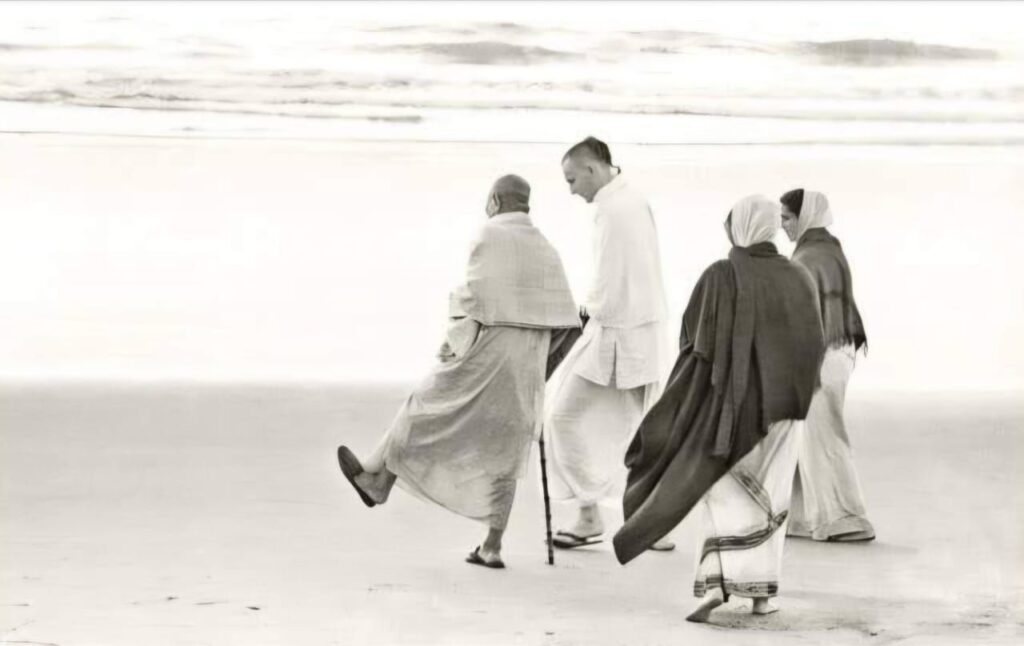
Bodhayantaḥ Parasparam: The Friendship of Devotees

Srila Prabhupada- In Bhagavad-gītā there is reference to bodhayantaḥ parasparam , “discussing among themselves.” Generally pure devotees utilize their valuable time in chanting and discussing various activities of Lord Kṛṣṇa or Lord Caitanya amongst themselves. There are innumerable books, such as the purāṇas, Mahābhārata, Bhāgavatam, Bhagavad-gītā and Upaniṣads, which contain countless subjects for discussion among two devotees or more. Friendship should be cemented between persons with mutual interests and understanding. Such persons are said to be sva jāti, “of the same caste.”

(SB 3.29.17p )

Only in the association of devotees

Unless one is associated with devotees, his devotional service does not mature ; it does not become distinct from material activities. The Lord says, satāṁ prasaṅgān mama vīrya-saṁvido bhavanti hṛt-karṇa-rasāyanāḥ (SB 3.25.25). Only in the association of pure devotees can the words of Lord Kṛṣṇa be fully potent and relishable to the heart and ear .

(SB 4.9.11p)

Respecting Krishna’s hidden abode

Jīva Gosvāmī, commenting on this verse, says that Kṛṣṇa, in His plenary expansion as Paramātmā, is situated in the moving and the nonmoving entities as the Supersoul, so any neophyte devotee who simply gives his attention to the arca-mūrti, the form of the Supreme Lord in the temple, and does not respect other living entities is uselessly worshiping the form of the Lord in the temple.

There are three kinds of devotees of the Lord, and the neophyte is in the lowest stage. The neophyte devotee gives more attention to the Deity in the temple than to other devotees, so Jīva Gosvāmī warns that this sort of mentality should be corrected.

A devotee should see that Kṛṣṇa is present in everyone’s heart as Paramātmā; therefore every body is the embodiment or the temple of the Supreme Lord, and as such, as one offers respect to the temple of the Lord, he should similarly properly respect each and every body in whom the Paramātmā dwells.

Everyone should therefore be given proper respect and should not be neglected.

(BG 9.11p)

Only one who executes his spiritual life under the direction of the spiritual master can achieve the mercy of Kṛṣṇa

In spiritual life, one must conduct one’s whole life under the guidance of the guru. Only one who executes his spiritual life under the direction of the spiritual master can achieve the mercy of Kṛṣṇa. Yasya prasādād bhagavat-prasādaḥ. If one desires to advance in spiritual life but he acts whimsically, not following the orders of the spiritual master, he has no shelter. Yasyāprasādān na gatiḥ kuto ‘pi.

(SB 7.12.11p)

One should become sannyasi by action, not by dress

Srila Prabhupada: Any family engaged in Krishna’s service is living not in this material world. Such a home is considered as Vaikuntha . That is the verdict of Bhaktivinode Thakura.

Your husband is already a householder sannyasi because he has no other business than to serve Krishna. You can be living peacefully with husband and children and always engaged in Krishna Consciousness. One should become sannyasa by action, not by dress.

(Letter to Indira  —  London 15 August, 1971)

No difference between chanting for Kṛṣṇa consciousness and working for Kṛṣṇa consciousness.

The Kṛṣṇa consciousness movement is teaching people how to come to the stage of dedicating everything to the service of the Supreme Personality of Godhead. Kṛṣṇa says in Bhagavad-gītā (BG 9.27):

yat karoṣi yad aśnāsi
yaj juhoṣi dadāsi yat
yat tapasyasi kaunteya
tat kuruṣva mad-arpaṇam

“O son of Kuntī, all that you do, all that you eat, all that you offer and give away, as well as all austerities that you may perform, should be done as an offering unto Me.”

If whatever we do, whatever we eat, whatever we think and whatever we plan is for the advancement of the Kṛṣṇa consciousness movement, this is oneness . There is no difference between chanting for Kṛṣṇa consciousness and working for Kṛṣṇa consciousness. On the transcendental platform, they are one. But we must be guided by the spiritual master about this oneness; we should not manufacture our own oneness .

(SB 7.15.64p)

Why we should daily hear a Srila Prabhupada lecture

God is known to be unconquerable, but one who submissively hears the words of a self-realized soul conquers the unconquerable. The conclusion is that if one is serious about liberation, he not only should execute the occupational duties of varṇāśrama-dharma but should also engage in bhakti-yoga by beginning hearing from a realized soul. This process will help the devotee conquer the unconquerable Supreme Personality of Godhead and become His associate after giving up the material body.

(SB 4.24.53p)

The potency of hearing Srimad Bhagvatam

By sufficient hearing of Śrīmad-Bhāgavatam, the polluted aim of life, namely lording it over matter, will subside…By the process of bhakti-yoga, directly accepted by sufficient hearing of the transcendental message of the Lord, the material contamination is directly eliminated… And by practicing bhakti-yoga, if the performer is not purified from the material contamination, he must be a pseudodevotee. For such an imposter there is no remedy for being freed from material entanglement.

(SB 2.2.37p)

The all powerful, Holy name of the Lord

Therefore it is recommended:

harer nāma harer nāmaharer nāmaiva kevalamkalau nāsty eva nāsty evanāsty eva gatir anyathā

“In this age of quarrel and hypocrisy the only means of deliverance is chanting of the holy name of the Lord. There is no other way. There is no other way. There is no other way.”

Simply by chanting the holy name of the Lord, one advances perfectly in spiritual life. This is the best process for success in life.

In other ages, the chanting of the holy name is equally powerful, but especially in this age, Kali-yuga, it is most powerful. Kīrtanād eva kṛṣṇasya mukta-saṅgaḥ paraṁ vrajet: (SB 12.3.51) simply by chanting the holy name of Kṛṣṇa, one is liberated and returns home, back to Godhead .

Therefore, even if one is able to perform other processes of devotional service, one must adopt the chanting of the holy name as the principal method of advancing in spiritual life.

(SB 7.5.23-24p)